Friday, November 20, 2009

The Celebrator Glass

I've written previously about the goat imagery associated with German Bock (the word applies to both the animal and the drink), and here's more evidence the Germans take this linguistic connection fairly seriously. But in this case the Bavarian brewers Ayinger have upped the ante, offering this lovely piece of glassware featuring not one but two billies.

Possibly not by accident: Ayinger Celebrator is a Doppelbock – the "doppel" prefix ("double" in German) indicates the style's comparative high strength versus regular Bockbier, though it can also be translated as "double goat." Twice the Bock? Twice the goats!

Though at least one source claims the Doppelbock style originated at a monastery in Northern Italy, other evidence suggests the style did not come into being until at least a few years after the Paulaner monks had moved, in 1627, to Munich from Italy (this may account for the confusion). It is there, this story goes, that the monks concocted a rich, nourishing brew to sustain them through the Lenten fast. That beer would eventually come to be called "Salvator," thus giving birth to the convention of affixing "-ator" to the names of Doppelbocks.

The Celebrator glass is a smallish (it holds about a 12 oz. bottle's worth), tastefully proportioned vessel, featuring the aforementioned goats embracing a frothy glass of rich brew beneath a gold-accented rim. Perhaps a little abnormally, especially for a beer whose ample vapors are ideally gathered up for proper sniffing, the Celebrator glass flares outward as it sits atop a shapely stem and foot. Ideally you'd like more of a bowl-shape to collect head and aromas, but an exception might be warranted here due to the novelty and attractiveness of this glass. (Boldness, too – most high-gravity beers go with a rounded/tapered option.)

Lent may yet be a ways off but as winter approaches, few beers satisfy like a rich, hearty Doppelbock. Pour one in the Celebrator glass (bonus points for choosing its delicious namesake brew), and you've got a drinking experience that will be hard to beat.

Saturday, November 14, 2009

The History of American Brown Ale & American Pale Ale (Kind Of)

Today, it's easy for us beer people – the committed and the casual alike – to take styles for granted. After all, we have organizations like the BJCP and competitions from the GABF to the World Beer Cup to myriad homebrew comps that help keep beers more or less tidily segmented and compartmentalized for us. Then there are beer-rating sites like BeerAdvocate and RateBeer that allow beer drinkers to see how their favorite commercial brews stack up against their category-mates.

Yet it wasn't so long ago that many of the styles we are so familiar with now were either a mere figment of a brewer's imagination, or even if sitting right under our noses, had yet to be given the proper recognition and codification that today seems like such a no-brainer.

In the former category falls American Brown Ale. As far back as the early 1980s, when all that the world knew of Brown Ales was Newcastle and the like, homebrewers out in California were whipping up their own imaginative take on the style. Scott Birdwell, owner of Defalco's Home Wine and Beer Supplies in Houston, and a seasoned pillar of the homebrewing scene in his own right, tells of a trip to San Rafael, Calif., sometime during the Reagan years:

I was visiting a couple of friends who owned a homebrew shop there (Jay Conner & Byron Burch - Great Fermentations). They had a flyer for a recipe for Purple Passion Dark Ale with John Bull Dark Malt Extract, crystal & chocolate malts, and a ton of hops. This was a popular recipe with their customers and did well in local and regional homebrew competitions, but got slammed in the AHA & HWBTA Nationals for not meeting the style guidelines for "Brown Ales" (assumed to be British brown ales). It was true these beers didn't conform to traditional brown ale standards: they were too dark and too bitter. But, man, they were popular on the West Coast, becoming increasingly popular on the Gulf Coast, and were damn good beers!

Now here's where those devoted, zany and innovative Houston-based homebrewers known as The Foam Rangers (my former club) enter the picture. Their annual Dixie Cup competition, which these days ranks among the world's largest annually, would play a vital role in bringing this unique California concoction into greater prominence. Scott "Da Birdman" again:

We were in the infancy of the Dixie Cup at that time and I decided to include a category for these brews. We already had a category called "No Commercial Comparisons," in which the entries didn't meet commercial standards (at least the commercial beers available at that time). We decided to call the new category "California Dark" in deference to our friends on the West Coast. The category was an immediate success, even if we weren't overwhelmed with entries. ... The AHA immediately picked up on the California Dark category, but curiously decided to name the style "Texas Brown Ale" in deference to us (nice, but we weren't the brewing innovators, just the competition innovators). Obviously this struck a note with homebrewers all over the country as this proved to be a popular style, and eventually the name evolved into "American Brown Ale." This is probably an appropriate name given its widespread popularity. These days I consider "Texas Brown Ales" to be "extreme" American Brown Ales: O.G. at least 1.060 and 40 IBU's, but that may just be me.

For all the strictness and even arbitrariness modern style parameters seem to reflect, this tale reminds us that styles do in fact arise organically – such that even a well-known style like American Brown Ale can be traced to a San Francisco suburb by way of a humble competition in Texas.

But that's not all. Consider this final anecdote from Scott:

As far as I know, Dixie Cup VII in October 1990 was the first time any homebrew contest featured a category entitled "American Pale Ale." In those days, when the number of beer style categories were considerably more limited, we (meaning the Foamers) did not limit ourselves to AHA and/or HWBTA style categories (this was before the BJCP established it's own guidelines). We felt free to establish our own categories with style descriptions for the Dixie Cup. This is how (American Pale Ale) came into being. ... That first year for APA (1990), it was the largest single category we had for that year's Dixie Cup (I seem to recall we received over 30 entries). The AHA jumped on this and incorporated APA the very next spring for the NHC.

Wow, talk about trail blazers. It's no huge leap to say this club and this competition were responsible for the formal recognition of two major American beer styles. And in the case of APA, consider that the very paradigm of the style, Sierra Nevada Pale Ale, had been in production for fully 10 years before the national beer-agenda setters, spurred by the Foamies, picked up on the style. Within two years, the GABF got on board, and APA has never looked back since. Ttoday there are over 2,000 commercial APAs listed on BeerAdvocate, more than any other single style.

Behold the power of homebrewers.

Friday, November 6, 2009

The Session #33 – Framing Beer

A mighty interesting, open-ended topic for this month's Session, hosted by Andrew at I'll Have a Beer and announced here. Our task is to consider how context and framing influence the way we consider and evaluate beers.

There are any number of ways to go with this thought-provoking topic, but in the interest of space and time I'll try to keep my focus tight. And given that many of my thoughts – my beer-related thoughts especially – fixate on homebrew, that seems like a good place to take this Session effort.

Homebrew competitions, by and large, are fine exercises for neutralizing many of the effects of context when it comes to evaluating beer. There are no names, so a brewer's reputation can't influence the judges. Extract vs. all-grain is not specified, so those biases are off the table. Recipes are not divulged, so expectations based on ingredients used cannot be considered. All that the judges have to work with is a declared style and a set of style guidelines against which to measure the entry.

And yet here is where we see how even in such a context-neutral environment as a homebrew competition, framing and context do indeed play key roles. More on that in a second.

As a card-carrying beer judge, I enjoy working competitions and trying my best to provide entrants with constructive, impartial and informed evaluation of their beers. But I know full well that, try as we might, judges are often vulnerable to context and framing influences, just as we are in "real-world" beer-drinking situations.

Let's start with the matter of categorization. So that beers can be properly evaluated against one another, entries are sorted into categories, with sub-categories further specified by the entrant. In so doing, the beers are pitted not only against each other but also a standardized set of guidelines specific to each style, with detailed notes on appearance, aroma, taste, mouthfeel, et cetera all assisting the judge in diagnosing the beer's quality. Thus the beer is framed before it even passes the drinker's lips – it is generally assumed that beers entered into a given category do indeed fall within its parameters; thus judges will tend to evaluate the beer as if it at least roughly fits the guidelines. Variation, where not plainly egregious, is often considered to amount to a mild departure from this or that prescribed quality.

This framing tendency is easily testable. I once entered a dark beer fermented with Witbier yeast and seasoned with coriander and citrus peel in the Brown Porter category. It scored fairly high marks, with none of the evaluators picking up on ingredients that, beyond a doubt, would be officially forbidden in the category. (And had I entered the beer in Specialty and declared the additions, I am certain they would have been commented upon.) Another amusing trick is to cross-enter the same beer in different, though similar categories in the same competition. (For example, Robust Porter and one of the Stout categories.) If the beer receives high scores in both cases, one has to wonder whether power of suggestion had prevailed or there was simply not enough daylight between the categories to reveal one entry as fraudulent. Perhaps a little of both.

Evaluating a beer against its category is only half the judge's task; the other is to suss out flaws in the production of the beer. A whole roster of off-flavors is usually available for consultation (though the experienced judge should already be familiar with these) and it is up to the evaluators, where appropriate, to call a brewer out for them and penalize the beer accordingly. (And, of course, to make suggestions for how to overcome the flaw next time.)

Judges are by no means assured of finding the same flaws in every beer they taste together. Some individuals simply are less sensitive to certain flavors than others – for a long time I did not believe I could easily pick up on diacetyl or oxidation – others may even have a reputation for being extra (or excessively) sensitive to some. I have been on judging panels where, once the score cards are compared, one would think we had sampled entirely different beers. (This makes it all the more gratifying when, in what itself is no rare instance, judges independently pick up on the same things.)

On larger panels, groupthink can become an issue, where a particular idea gains traction and suddenly the entire table becomes convinced that a certain flaw or characteristic is present. Sometimes consensus arrives by way of a particularly strong personality, or others' lack of confidence, or power of suggestion.

I don't mean to impugn homebrew competitions unfairly; on the whole I'd say judges tend to get the calls right, and at the end of the day the best beers are rewarded while the less-than-stellar ones are not. But beware the veneer of objectivity and the assumption it can be achieved to an absolute degree. It just may be that framing and context in beer evaluation – as in just about all other aspects of life – could be unavoidable after all.

Tuesday, November 3, 2009

Orval Dregs at Work

I had been extremely excited about my upcoming run of Belgian-style beers, all to be brewed one after another (no non-Belgians in between) and using the same esteemed yeast purportedly sourced from the Trappist brewery Westmalle (and also used by Achel and Westvleteren). Inching up in alcohol, from Belgian Pale Ale to Dubbel to Tripel, this was to be, admittedly, my most ambitious (in terms of uninterrupted focus) series of Belgians yet created.

Well, here we learn, by inverse anyway, of the value of practice and experience in brewing. Being my first time with this yeast, and in some cases with the style, an unfortunate possibility came to pass when none of the three beers came out quite as good as I'd hoped (the Pale Ale being the least offensive of the three), with an unfortunate phenolic bite being a hallmark showing through most clearly in the Dubbel. (The Tripel, for its part, at this point remains so alcohol-laden as to accomodate fixation on little else. Many bottles of it, and the other two, have been squirreled away where neglect and age will hopefully bestow their favor.) Brewing all three in succession did not afford the chance to apply lessons learned within the course of this three-brew series; doing so will have to wait until next time.

In an effort to (1) turn something unspectacular into something potentially interesting, (2) free up space among the taps, where I faced the unappealing prospect of having to trudge my way through mostly full kegs or let them sit and hope things improved, and (3) provide an excuse to buy and drink a beer I don't have often enough, I blended the remnants of the Pale Ale and Dubbel into a carboy (with a dash of Black IPA added for extra bitterness and flavor), created a small amount of additional wort, and pitched into it a starter of cultured-up Orval dregs from two bottles.

Here is what things look like a little more than 48 hours into the experiment:


Note the rather sizeable mat of krausen. This tells me one thing primarily: Orval dregs must not contain simply the "wild" yeast Brettanomyces that helps to lend the beer its signature flavor, but some strain of Saccharomyces as well. Indeed, this much has been speculated upon on brewing forums and even suggested on the Orval Web site itself. I say this because Brett is understood to be a relatively slow worker (activity here kicked off in a matter of hours) that creates a pellicle on the beer's surface.

The addition of around 0.5-0.75 gallons of fresh wort will provide the Saccharomyces and Brett more sugars to consume and assert themselves (while also hopefully countering somewhat the off flavors of the previous fermentation). Additionally, this new wort was given about 2 ounces total of late hops – a small 5-minute addition of Santiam and a flameout addition of Santiam and Mt. Hood that was steeped. This again was intended to provide additional complexity to cover up off flavors while also serving as a nod to Orval's notable late hopping. I think the unusually dark surface of the krausen may owe to this extra hop matter being pushed up to the top. My Frankenstein's monster might be dry-hopped as well, like Orval is.

There's no telling how this odd amalgamation of mine will turn out. My hope is the Brett will impart enough funky goodness to overcome the previous yeast's footprint, while further drying out the beer and helping to accentuate the newly added hops. Did I mention this is my first foray into the use of "exotic" strains like this? Doubly exciting.

Sunday, October 4, 2009

The Session #32 – Eastern Beers

Looks like I've taken a couple months off from participating in The Session, the monthly beer-blogging thing you can read about here. And when I do get on board, I usually do so a couple days late. Like this month.

Our task for Session #32, as assigned by Girl Likes Beer (and recapped here), was to "pick your favorite beer made east [from] your hometown but east enough that it is already in a different country. It can be from the closest country or from the furthest. Explain why do you like this beer. What is the coolest stereotype associated with the country the beer comes from (of course according to you)?"

For Americans, of course, this is an easy question given all the great beer over in Europe (i.e. east of us). I thought I'd try to make this interesting by seeing what beer-producing lands might fall along my same line of lattitude (around 34°) but seeing as how that line will take you through North Africa and the Middle East on the way to China, I'm not sure I have many options there. So anywhere east will have to do.

Having been lucky enough to have traveled to Europe a few times, I can easily pick from any number of delicious beer styles I've enjoyed in their homelands – from authentic, delicious English Bitter and Porter to the wonderful, unique and diverse Belgian ales and the lagers of Germany, Austria and the Czech Republic. For a beer lover, it's something of a pilgrimage to be able to enjoy a beer where and how it was meant to be enjoyed – hand-pulled ale in a cozy London pub; bright, revelatory Geueze in Brussels; liter upon liter of German lager so tasty and drinkable its nearly shameful; Pilsner Urquell that's about as delicious and fresh as it seems beer can be.

These are the easy answers, and there are more just like them. But seeking out great beer is not the only reason to travel; it's a sad truth that some of the world's highly interesting and beautiful places have hardly any beer culture to speak of. Shocking though this may be, it is manageable – not to mention a nice reality check for those of use who might take beer not only too seriously, but for granted also. It's during these times that the rare, unexpected moments of beer pleasure are all the more welcome and rewarding.

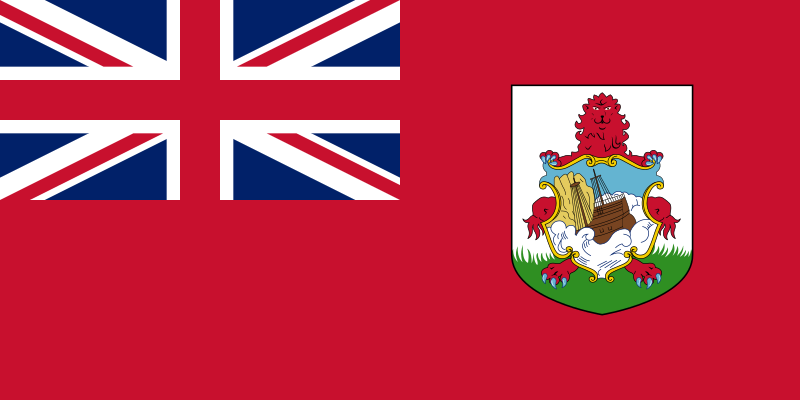
With all that in mind, I'll play it loose a little with this Session topic and revisit one such icing-on-the-cake beer moment I wrote about not long ago. In Bermuda this summer – despite its British heritage not exactly a land of great beer – I was more than content to soak up the beautiful water, weather and scenery of such a charming place. So it was all the more enjoyable when I found, at a simple cove-side food shack looking out upon a typically gorgeous Bermudian scene, real, tropical-style Guinness Foreign Extra Stout. The stronger stuff too, not the Canadian-brewed version we get in the U.S.

I hope Girl Likes Beer will pardon my flexible interpretation of her topic, as it bears noting that this Guinness wasn't actually brewed in Bermuda, only consumed there. Though, certainly, its eastern origin remains in place.

Beer historians connect Foreign Extra Stout with the tropics (it can even be called "Tropical Stout") due to the style's former, and to an extent present, popularity there – no doubt thanks to the one-time colonial presence of Stout-loving Brits in places like Jamaica and Bermuda. But for people who don't know of such things, so stout a beer is among the last things they'd associate with these island paradises. Rum and Red Stripe, yes. FES, not so much.

Back at the food shack, I would have been perfectly content to enjoy my pre-snorkel lunch in the company of an uncomplicated European macro-lager. Instead, I got confirmation of what select islanders already know – that a strong, roasty, bitter stout can be plenty satisfying in these tropical environs.

It goes to show that when you're least expecting it, great beer can sneak up on you and make a wonderful experience even better. And if the object of great beer isn't to enrich life, I'm not sure what it is.

This view and FES? I'll take it.

Tuesday, September 15, 2009

Do You Get It in the Can?

Now come on, this is too funny:

Tuesday, September 8, 2009

Drunken Reinbeer

I hardly ever do clone recipes, whether my own or drawn from other sources. For starters, it's very difficult to faithfully duplicate a commercial beer anyway – especially not without taking multiple cracks at it, something I'm even less inclined to do – and besides, part of the appeal of homebrewing, for me, is creating something original.

But after having my first (and, to date, only) bottle of Odell Brewing Co.'s 90 Shilling, I knew I'd love to have a beer like it on tap at home. Incredibly drinkable, well-balanced and just plain tasty, 90 Shilling is a winner of a beer.

I did a little research, asked around on a homebrew forum or two, and came up with a recipe that, while not attempting to reproduce 90 Shilling down to each detail, was at least inspired by it. So you might call this a semi-clone.

Here's what I came up with:

OG 1.057 FG 1.014
ABV 5.6% AA 74.5%
IBUs 28 SRM 16

58% Canadian two-row
33% Pacific Northwest Vienna
5% Crystal 60
2% Crystal 40
2% British chocolate malt

14 IBUs Magnum – 60 mins
10 IBUs (0.5 oz.)
Northern Brewer – 30 mins
0.5 oz. Cascade – 10 mins

Wyeast 2450 "Denny's Favorite 50"

You may be wondering about the name. This beer was originally brewed to give out as Christmas gifts to family. I wanted to come up with something clever: Drunken Reinbeer seemed to fit the bill. That original batch was fermented with US-05, the dry "Chico" yeast. For the second time around, I wanted to try out the special Wyeast strain I'd had in my yeast circulation at the time. I also made a couple mild adjustments, like subbing North American two-row for the British base malt I had used, and upping the amount of Vienna.

The balance here is slightly on the malty side, with a supportive bitterness that carries the beer's moderate caramel and slightly roasted tones through to the finish. Consistent with what I'd come to discover with a previous batch fermented with 2450, this beer presents a little extra fruitiness that I tend not to prefer in my beers; in fact, my experience with this yeast tells me it does best (that is, agrees with my tastes most) when paired with a Pale-Ale-or-better helping of hops. So, and in accordance with my fondness for blending beers, when I drink this beer I tend to add a dash of something hoppy to help distract from those esters. Presently it's a Black IPA.

If I were the kind of brewer (I'm not) who continually revisits and hones recipes, applying a tweak here and a tweak there, it's quite likely that whatever beer this would turn into might be plenty far from Odell's 90 Shilling, its original inspiration. And if that were to be the case, more the better, right? Better to always brew to your own tastes, in the end.
Related Posts with Thumbnails